Tutorials

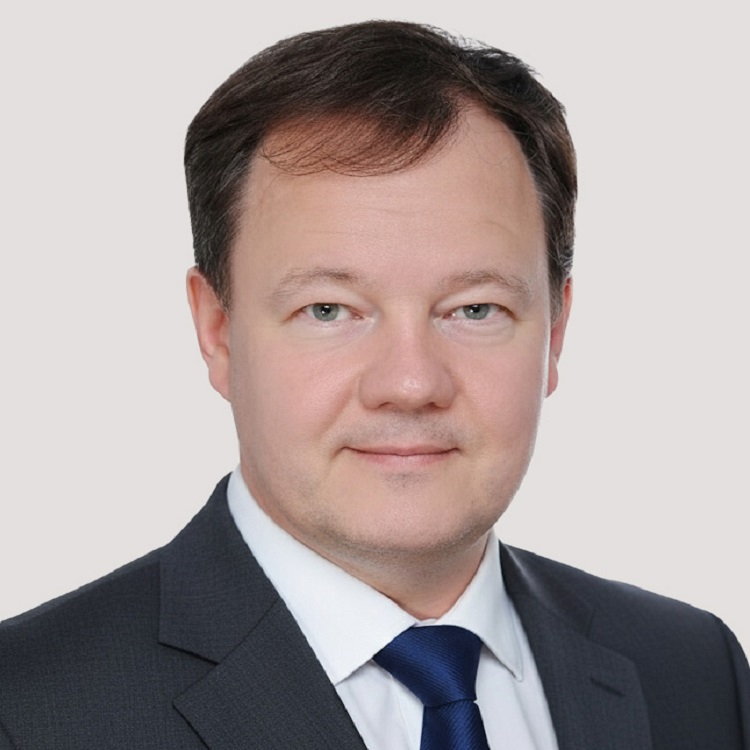
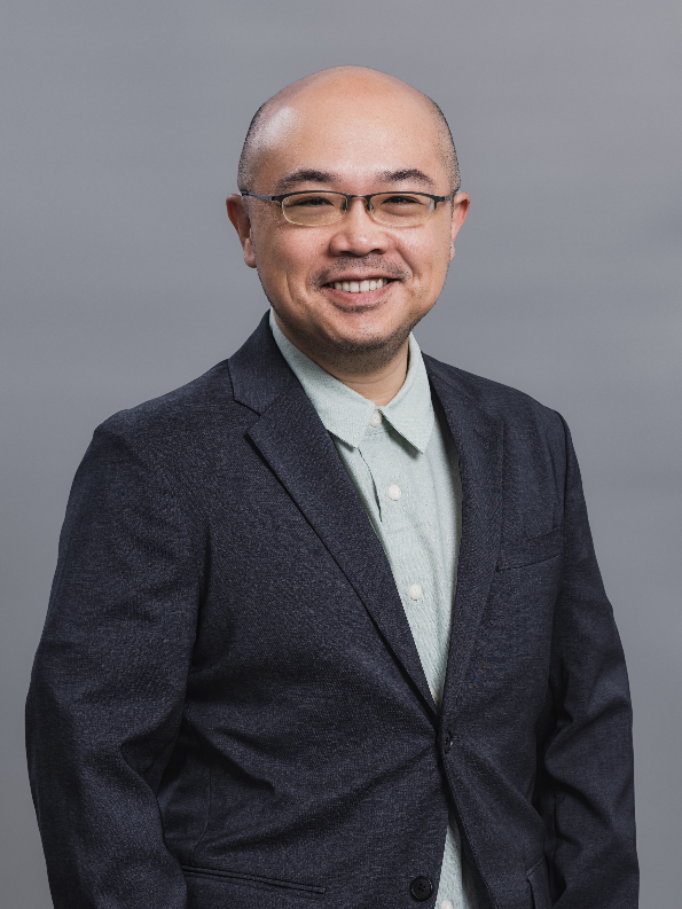
Prof. Ping-Chun Hsieh
Prof. Yu-Shuen Wang

Beyond Single-Task Reinforcement Learning: Robustness, Generalization, and Fast Adaptation

Prof. Ping-Chun Hsieh

Computer Science Dept., National Yang Ming Chiao Tung University, Taiwan

Prof. Yu-Shuen Wang

Computer Science Dept., National Yang Ming Chiao Tung University, Taiwan

Abstract

Reinforcement learning (RL) has historically been developed under a single-task assumption: an agent is trained and evaluated within the same Markov Decision Process (MDP). This paradigm enabled major advances in theory and practice, but it is misaligned with real-world deployments where agents must generalize across environments, adapt to new tasks, transfer knowledge across domains, and handle uncertainty or shifting objectives. In recent years, several research directions have emerged to address these gaps, including robust RL (uncertain dynamics), meta RL (fast adaptation under a task distribution), cross-domain RL (mismatched state/action spaces), multi-objective RL (vector rewards and unknown preferences), and reward-free RL (learning reusable representations without rewards). These areas are often studied in isolation, with distinct terminologies and assumptions, making it difficult for researchers and practitioners to build a unified mental model. This tutorial aims to provide a unified, structured view. We frame these settings as instances of generalization across MDPs, highlight their shared core ideas (representation learning, uncertainty handling, adaptation, compositionality), and clarify key differences (what shifts, what is observed, what is optimized). We will cover representative algorithmic techniques, theoretical lenses, and practical considerations, and discuss how these directions connect to modern application demands (robust deployment, transfer, continual updates, multi-criteria decision making). This allows the community to better keep pace with the rapid expansion of the RL landscape.

Biography

Dr. Ping-Chun Hsieh is an Associate Professor of the Department of Computer Science at National Yang Ming Chiao Tung University (NYCU). He received his B.S. and M.S. in Electrical Engineering from National Taiwan University in 2011 and 2013, respectively, and his Ph.D. degree in Electrical and Computer Engineering from Texas A&M University in 2018. His research interests include reinforcement learning, multi-armed bandits, Bayesian optimization, and wireless networks. His research received the Best Paper Awards from ACM MobiHoc 2020 and ACM MobiHoc 2017. He is a recipient of P.-C. Huang Junior Chair Professorship from NYCU, NSTC 2030 Emerging Young Scholar Program, MOST Young Scholar Fellowship, NYCU CS Outstanding Young Scholar Award, Pulsaris AI Chair Professorship, and the Government Scholarship to Study Abroad from the Ministry of Education, Taiwan. Dr. Hsieh is a Fellow of the Higher Education Academy (FHEA).

Prof. Yu-Shuen Wang is a professor of the Department of Computer Science at National Yang Ming Chiao Tung University. He received his PhD degree from the Visual System Laboratory, National Cheng Kung University, Tainan, Taiwan, ROC, in 2010. Currently, He leads the Computer Graphics and Visualization Lab at the Institute of Data Science and Engineering. His research interests include Computer Graphics, Computer Vision, Machine Learning, and Reinforcement Learning. He was honored with the prestigious Wu Da-Yu Memorial Award and the NCTU EECS Outstanding Young Scholar Award.
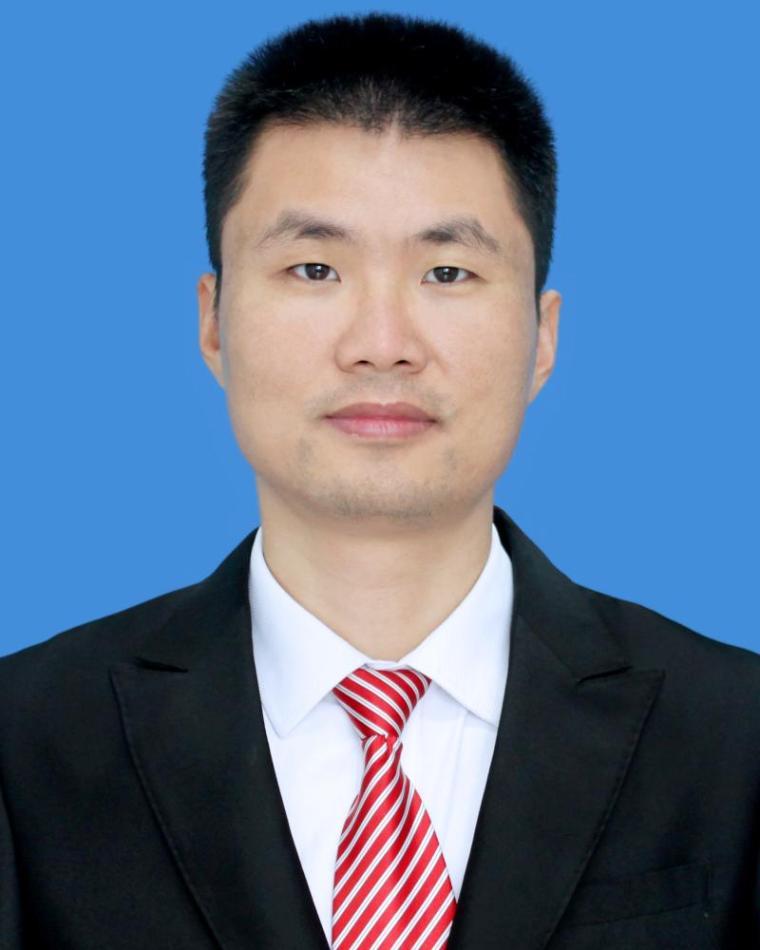
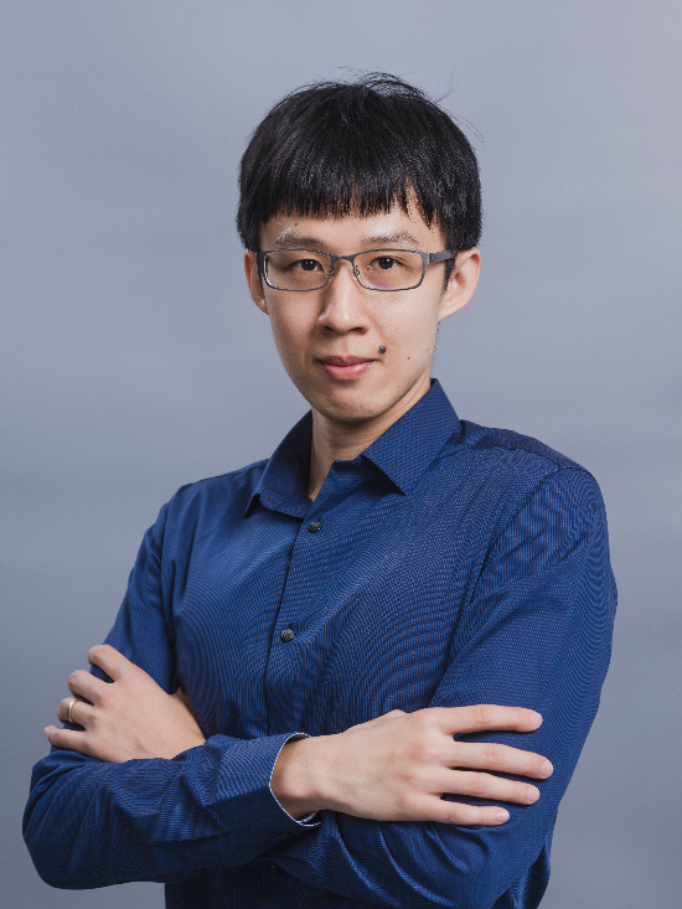
Prof. Yipeng Liu

Hyperspectral imaging (HSI)

Prof. Yipeng Liu

University of Electronic Science and Technology of China (UESTC), China

Abstract

Hyperspectral imaging (HSI) is a high-dimensional sensing modality widely used in remote sensing, healthcare, industrial inspection, and food science. Most HSI taskssuch as compressive sampling, reconstruction, denoising, super-resolution, and blind degradation correctioncan be formulated as ill-posed inverse problems. Traditionally, these problems have been addressed within variational optimization frameworks, where physical degradation models are incorporated together with hand-crafted structural priors, such as sparsity, low-rankness. In recent years, deep learning has provided a data-driven solution for inverse problems, which can result in superior empirical performance in some scenarios. However, due to the limited incorporation of physical prior knowledge, only data-driven deep learning methods may suffer from limited interpretability and weak generalization ability. Recently, learnable optimization sets up the optimization model with physical interpretability, but its optimization algorithm itself is parameterized and trained from data, rather than being fully hand-designed. This integrated perspective does not only leverage the interpretability and stability of model-based approaches, but also benefits from the expressive power of data-driven counterpart. Despite its remarkable advances, there is no systematic work to summarize learnable optimization for signal processing, especially in the context of hyperspectral imaging. This tutorial shows how neural networks can be systematically integrated into the solutions for HSI inverse problems. It provides examples for generalizing signal processing methods into data-driven extensions.

Biography

Prof. Yipeng Liu is a full professor with School of Information and Communication Engineering, University of Electronic Science and Technology of China (UESTC), Chengdu, China. He has studied and worked at UESTC, Huawei Technologies and University of Leuven.

His research interest is tensor optimization for signal processing. He has published over 100 papers, coauthored two books, Tensor Computation for Data Analysis by Springer and Tensor Regression in Foundations and Trends in Machine Learning, and edited one book Tensors for Data Processing by Elsevier. He has received the IEEE BMSB 2025 Best Paper Award, and IEEE ICME 2025 Best Demo Award. He has been an associate editor for IEEE Transactions on Image Processing and a senior area editor for IEEE Signal Processing Letters. He has delivered 6 tutorials for IEEE flagship conferences, such as ICME 2025, ICIP 2024, ISCAS 2024. He is the APSIPA Distinguished Lecturer 2022-2023.

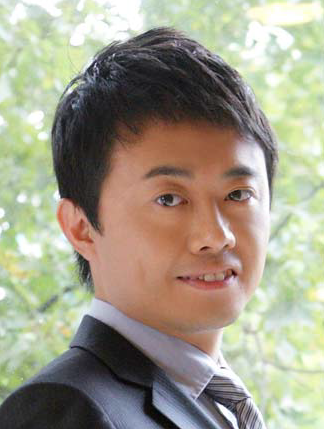
Prof. Ying-Ren Chien
Assoc. Prof. Pavel Loskot
Yu Gao

Statistical and Deep Learning Methods in Speech Processing

Prof. Ying-Ren Chien

National Taipei University of Technology, Taiwan

Assoc. Prof. Pavel Loskot

Zhejiang University – UIUC Institute, China

Yu Gao

AI Research Center, Midea Group, China

Abstract

Speech processing has many real-world applications. For example, the array of microphones can be used for voice-based human-machine interactions. Automatic speech recognition systems (ASR) need to robustly extract the key features despite multipath propagation, acoustic echoes, and various background noises. Moreover, the sensors themselves may cause signal clipping and other non-linear distortions. This requires developing data processing methods that are not only sufficiently robust, but that can be implemented within limited hardware and software resources in consumer appliances and other products. The underlying data processing tasks include clean voice extraction, source separation and extraction, suppression of undesirable acoustic sources, and signal dereverberation. For many years, these tasks were solved using statistical model-based techniques, which are provably optimum and interpretable. More modern approaches adopts universal machine-learning based methods, which can be effective across wider range of acoustic environments. The main drawback of these model-free methods is their excessive computational complexity requiring relatively large resources, difficulty in obtaining good quality training data, and long-time required for their training, testing and validation, especially to make them effective in diverse acoustic environments. The objective of this tutorials are: (1) review mathematical models of acoustic environments, and speech processing tasks, (2) describe traditional statistical methods for speech processing, (3) explain state-of-the-art methods combining model-based and model-free approaches, and (4) discuss practical implementation and deployment issues of voice-controlled human-machine interactions.

Biography

Ying-Ren Chien is a Full Professors in the Department of Electronic Engineering, National Taipei University of Technology, Taipei. His research interests include consumer electronics, multimedia denoising algorithms, adaptive signal processing theory, active noise control, machine learning, the Internet of Things, and interference cancellation. Dr. Chien was the recipient of the best paper awards, including ICCCAS 2007, ROCKLING 2017, IEEE ISPACS 2021, IEEE CESoc/CTSoc Service Awards in 2019, NSC/MOST Special Outstanding Talent Award in 2021, 2023, and 2024, Excellent ResearchTeacher Award in 2018 and 2022, and Excellent Teaching Award in 2021. From 2023 to 2024, he was Vice Chair of the IEEE Consumer Technology Society Virtual Reality, Augmented Reality, and Metaverse (VAM) Technical Committee (TC). Since 2025, he has been the Secretary of IEEE CTSoc Audio/Video Systems and Signal Processing TC. He is currently an Associate Editor for IEEE Transactions on Consumer Electronics.

Pavel Loskot joined the ZJU-UIUC Institute in January 2021 as Associate Professor after 14 years with College of Engineering, Swansea University, UK. In the past 30 years, he was involved in numerous collaborative research and development projects, and also held a number of paid consultancy contracts with industry mainly, but not only in wireless communications. His research interests focus on mathematical and probabilistic modeling, statistical and digital signal processing, and machine learning for multi-sensor, tabular, and longitudinal data. He received 8 best paper awards, and delivered 18 tutorials in international conferences including BigComp 2024, APSIPA ASC 2017/2021/2022/2024, and IEEE MILCOM 2018/2019. He is the Fellow of the HEA, UK, Recognized Research Supervisor of the UKCGE, and the IARIA Fellow. He is the Editor in ICT Express.

Gao Yu obtained BSc and MSc degrees in EE from the USTC. He is currently the Head of Human-Computer Interaction Algorithms at Midea Group's AI Innovation Center, and the Director of the National New Generation AI Innovation Platform for Home Robots. He holds over 50 domestic and international patents in speech processing and NLP concerning intelligent speech & language algorithms, and the AI industrialization. He has led the development of 10+ IEEE and national standards. He is also an Executive Member of the CCF Speech & Dialogue Special Committee, and a Member of the National Standardization Committee (TC46/TC28).

Event Terms and Conditions | Privacy & Opting Out of Cookies
©2026 APSIPA ASC. All rights reserved.